Safe Acids vs. Unsafe Acids for Kids Skin
Safe Acids vs. Unsafe Acids for Kids’ Skin — and Why We Use the Good Stuff in FUNNYSKIN
Children’s skin is wonderfully resilient and cute — but it’s also different from adult skin: thinner, more reactive, and still building its barrier defence. That means when it comes to skincare for kids (roughly ages 8-16 in our brand’s focus) we must take extra care.
At FUNNYSKIN we believe in using ingredients specially selected to support and protect growing skin, rather than overwhelm it with “adult strength” actives.
Here’s how we approached it.
Why some acids and strong actives are not ideal for kids’ skin
When we say “unsafe acids” in this context, we’re talking about heavy exfoliants and strong actives that are common in adult skincare—for example high-strength AHAs (glycolic, high‐dose lactic), BHAs, retinoids, strong vitamin C derivatives, etc. We avoid these for young skin because:
- Young skin’s barrier is thinner and more permeable → higher risk of irritation or over-reaction.
- Kids often don’t need aggressive exfoliation — their skin turnover is naturally faster, and too much action can disturb the barrier.
- We aim to build healthy skin habits, not trigger sensitivity that could lead to long-term issues.
So yes: we steer clear of strong acids, heavy retinoids, alcohol, artificial fragrance, and unnecessary “trend” actives for our 8-16 age group.
What we do use — and why
Here are the core ingredients in FUNNY SKIN’s products and how they benefit young, developing skin:
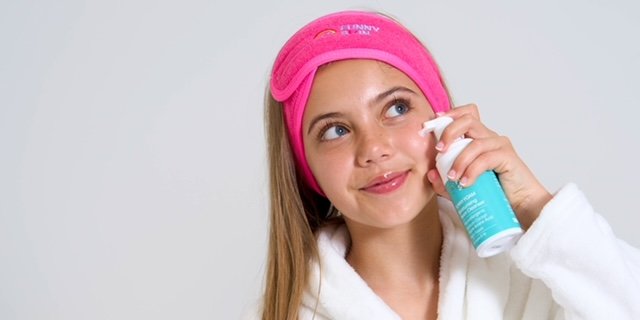
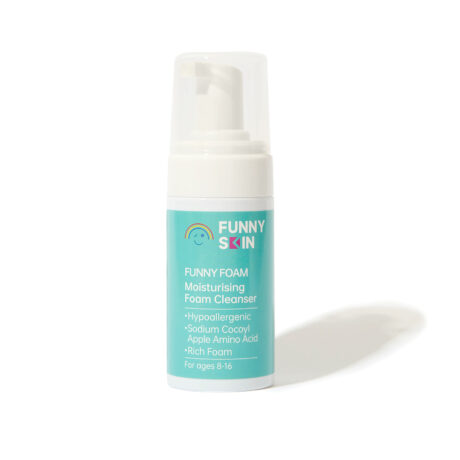
Amino Acid & Gentle Surfactant Cleanser (in Funny Foam)
Our Foaming cleanser uses amino acids + amphoteric surfactants (rather than harsh soap). It’s pH-balanced, very gentle, and formulated to remove oil/makeup/debris without stripping.
Why this is beneficial: Kids’ skin doesn’t need heavy strippers. A gentle cleanser helps maintain the barrier, prevents over-drying, irritation, and supports healthy everyday skin.
Why we chose it: It ensures even oily or breakout-prone pre-teen skin is cleansed without triggering sensitivity.
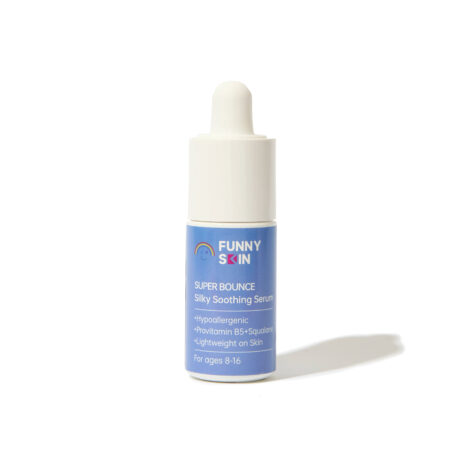
Hydrating & Barrier-Supporting Serum (in Super Bounce)
This serum features squalane, panthenol (pro-vitamin B5), tremella extract (snow mushroom), and bisabolol.
It’s meant to deliver “Triple Hydration Complex” + soothe redness.
Why this is beneficial:
Squalane mimics skin’s natural lipids → supports the barrier, prevents moisture loss.
Panthenol hydrates and helps repair/soothe the barrier.
Tremella extract provides deep hydration (acts similarly to hyaluronic acid).
Bisabolol calms irritation and inflammation.
For young skin that may be sensitive, still adapting to environment and hormones (hello, early teen years), these help maintain comfort, boost barrier strength, and keep skin balanced.
Why we chose it: Instead of aggressive “active” treatments, we prefer nurturing, protective and hydration-based formulas for this age group.
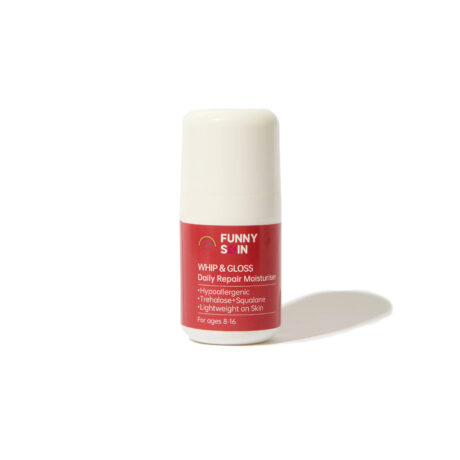
Daily Moisturiser & Barrier Repair (in Whip & Gloss Daily Repair Moisturiser)
Key ingredients:
Squalane, shea butter, trehalose, bisabolol (and 4-Tert-Butylcyclohexanol for soothing).
Mildly acidic pH, free from soap, alcohol, artificial colours, parabens.
Why this is beneficial:
Shea butter: rich in fatty acids, super for nourishment.
Trehalose: a sugar that helps retain moisture and strengthen the barrier.
Squalane: again barrier support.
Bisabolol + 4-T-BCH: soothing sensitive skin, redness, irritation.
Young skin, especially during hormonal changes, can get dry patches, uneven texture, or mild redness — this moisturiser targets that with protective, gentler formulation.
Why we chose it: We want a daily product that’s fun to use (texture, feel), but also seriously functional in keeping skin healthy rather than just decorative.
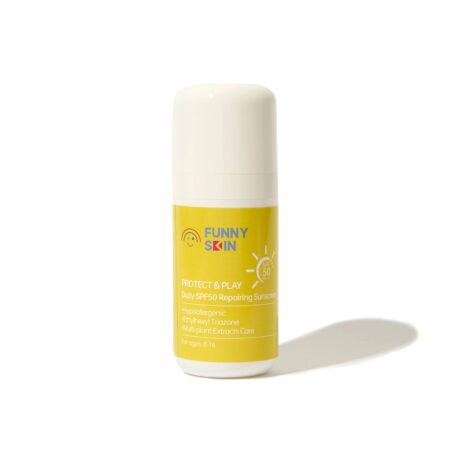
Sunscreen Protection (in Protect & Play SPF50)
Broad-spectrum SPF 50, over 12 hours defence, lightweight, plant extract boosted (e.g., centella asiatica, lotus flower).
Why this is beneficial: Young skin is more vulnerable to UV damage because it’s still developing its natural defences.
Daily sun protection is one of the best “skincare habits” to establish early.
Why we chose it: Because protection beats correction. Rather than rely on strong acids or treatments later, we help kids prevent damage now.
Putting It All Together: Safe Acids + Healthy Skin Without the Risk
While we say “acid” in everyday talk, in our range you’ll notice that we’re not using strong exfoliating acids (like high-dose AHAs/BHAs) for our target age group. Instead we use hydrating acids (like hyaluronic / trehalose) and lipid-supporting fatty acids (squalane, shea butter) and we use “acidic pH” in products like the moisturiser to respect the skin’s natural acid mantle, but we avoid heavy acid exfoliants altogether.
Why is that a good thing?
We maintain the skin’s natural pH and barrier rather than disrupting it.
We reduce risk of irritation, redness, long-term damage.
We help build skin health and habits rather than chase adult “results” too early.
So:
Unsafe / Avoid for kids: high-strength AHAs/BHAs, retinoids, strong vitamin C, alcohol, fragrance overload.
Use wisely / Safe: gentle hydrating acids (e.g., hyaluronic acid-type), barrier lipids, soothing ingredients, mild cleansers, SPF.
Our formulas align with the “Safe” bucket — supporting young skin’s unique needs rather than pushing it into adult mode too soon.
Why Establishing Good Skin Habits Early Matters
When children learn to care for their skin with the right kind of products, you get:
A strong, healthy barrier → fewer irritations, fewer flare ups.
Habit of daily protection + gentle care (rather than aggressive treatments).
Skin that evolves naturally, without being forced into heavy “adult” routines.
Better long-term outcomes: less risk of damage, less raised sensitivity.
For the 8-16 year group, it’s less about “treating problems” and more about preventing them, “maintaining” rather than “fixing”.
Safe Acids for Kids (The Good Guys)
Lactic Acid (when used in low, gentle concentrations)
Why it’s safe:
Lactic acid is one of the gentlest AHAs.
It occurs naturally in the skin’s own moisture barrier.
In low percentages, it acts more like a hydrator than an exfoliant.
Benefits for kids:
Helps keep skin soft and smooth
Supports the skin’s natural moisture balance
Helps with mild bumps or rough patches without over-exfoliating
We may use lactic acid in very controlled, low percentages to keep skin happy, not scrubbed.
Hyaluronic Acid
Not really an exfoliating acid — but still an “acid” by name.
Why it’s safe:
Naturally found in our bodies
Helps retain up to 1000x its weight in water
Non-irritating and barrier-friendly
Benefits for kids:
Boosts hydration
Helps prevent dry patches
Keeps young skin bouncy and comfortable
Perfect for climates, winter skin, and kids who don’t drink “enough water” (all of them).
Fatty Acids (Ceramides, Linoleic Acid, Omega-Rich Oils)
These are essential building blocks of the skin.
Why they’re safe:
They already exist in the skin barrier
They replenish what kids naturally lose
They strengthen skin rather than stripping it
Benefits for kids:
Strengthens the skin barrier
Helps prevent eczema flare-ups or irritation
Keeps skin resilient and protected
Fatty acids are heroes for sensitive, reactive little faces.
Final Word
At FUNNYSKIN we believe in smart skincare for young skin: fun textures, safe formulas, and ingredients chosen for support, not shock.
We use hydrating, soothing, barrier-strengthening ingredients rather than aggressive acids that belong in older skin’s routine. We want kids to feel confident in their skin, not overwhelmed by what they put on it.
So yes — acids can be safe for kids when chosen carefully (hydration-type acids, barrier-friendly acids). But we avoid “strong” acids and actives that don’t serve growing skin well.
And we focus on protecting, nourishing and maintaining young skin’s health.